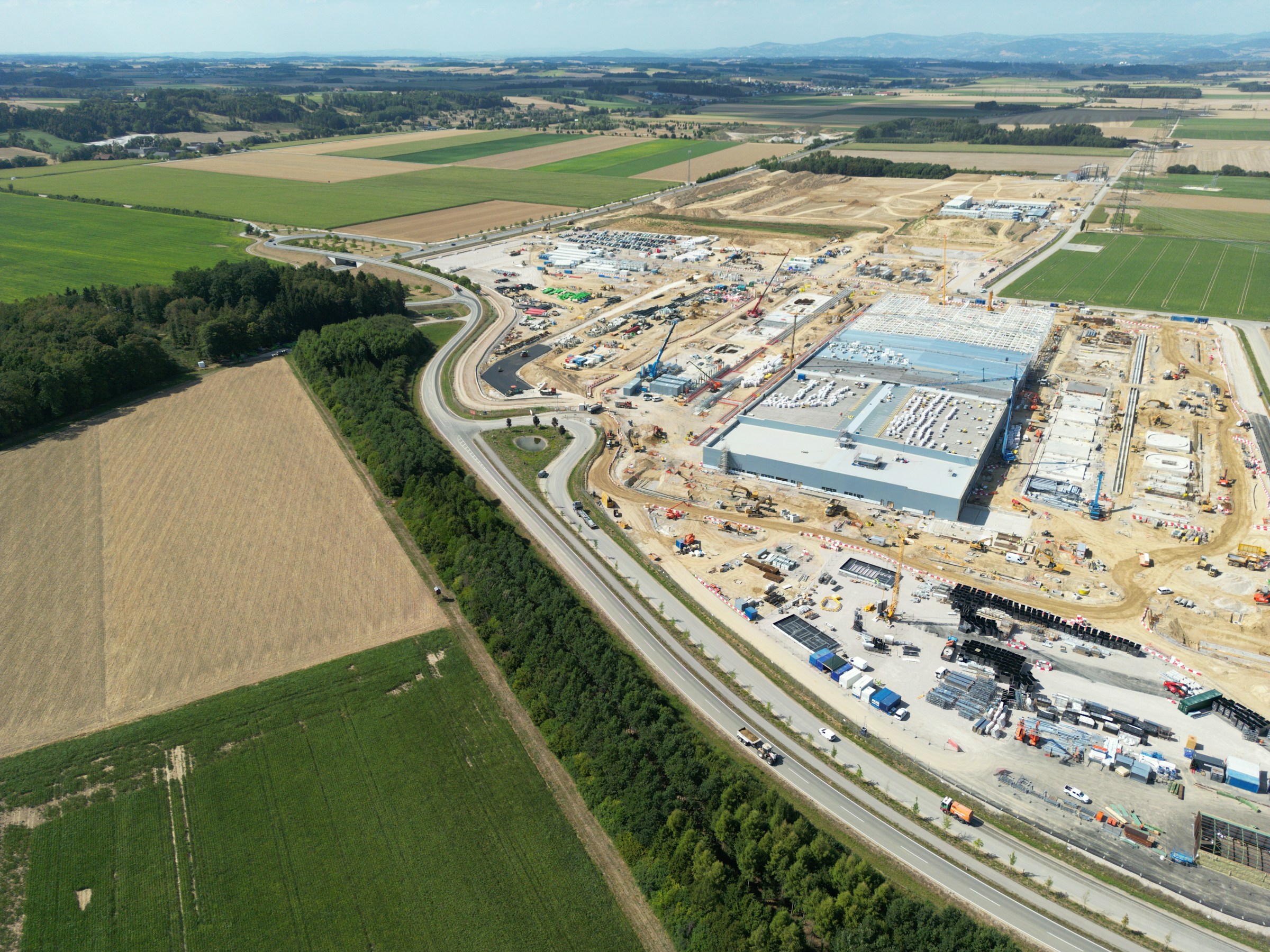
Align the design system
One set of components and assets made changes reusable across Client and Internal.
GRIDPILOT AI · 2026

Overview
GridPilot’s ambition is a 24-hour grid interconnection workflow, bringing technical data, site evidence, and engineering models into one submission packet.
Working with the founder, I designed a client-ready prototype built entirely with Codex. I owned hierarchy, components, review states, and design acceptance; Codex implemented the screens and motion.
What would you like to build today?





The redesigned client flow: project setup, recognizable documents, and an explicit handoff to review.
Login visual, review confirmation, document transitions.
Energy imagery establishes character at entry. A glass checkmark confirms submission; moving documents signal review in progress.
01 / The challenge
The early prototype repeated progress across chat, the stage rail, and a status card. Important context was truncated while processing narration filled the screen.
I replaced repeated explanation with visible files, clear states, and deliberate actions.
02 / MY APPROACH
I set the rules, directed Codex’s implementation, reviewed the rendered flow with the founder, and fed specific corrections into the next iteration.
One set of components and assets made changes reusable across Client and Internal.
Clear writing rules replaced repetitive explanations with useful content, states, and actions.
Prototype reviews with the founder turned product expectations into specific interaction decisions.
I aligned typography, controls, document previews, and state tokens before refining individual screens. The tradeoff: shared components for consistency, distinct status meanings for different responsibilities.
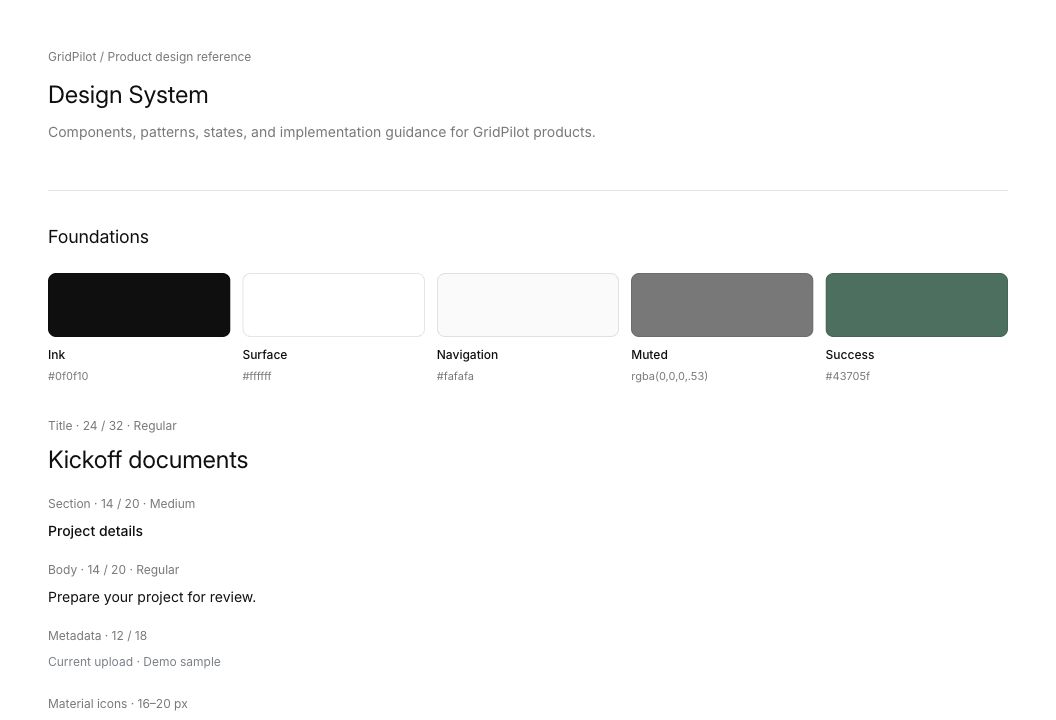
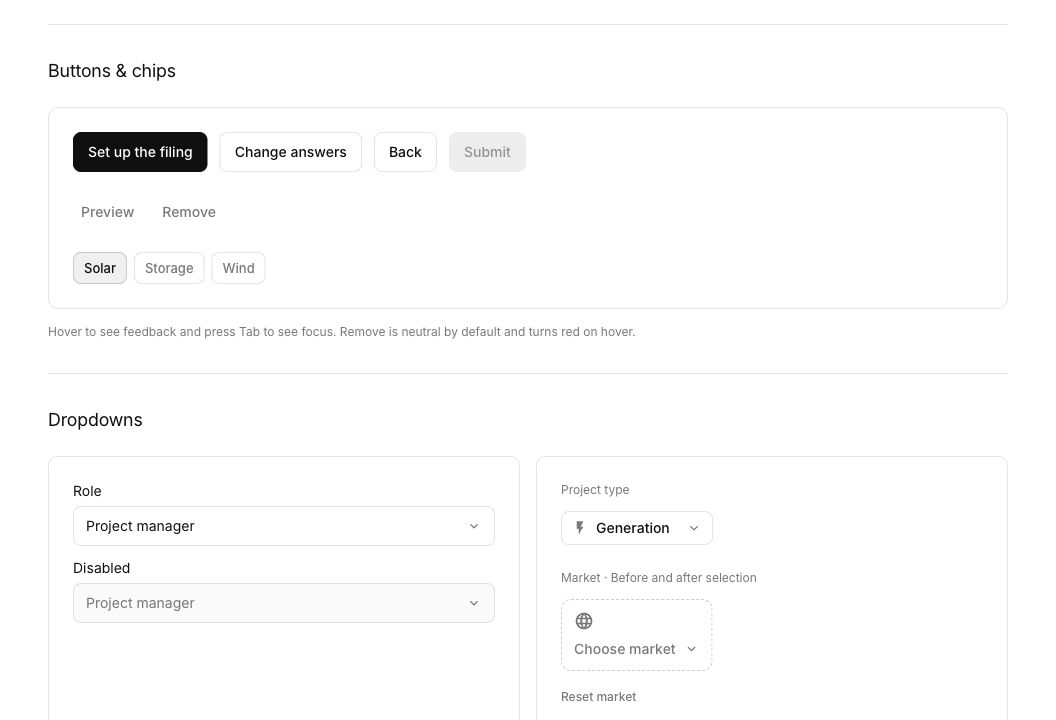
Filenames and thumbnails show the material. Missing states show what is needed. Preview and Submit for review make the next step clear.
I turned these principles into a reusable Codex skill, so the same writing rules could guide each iteration.
Method 03 / Refine the decision boundaries
A single green “done” state would be compact, but misleading. I separated file receipt, required sign-off, and approval so progress never implied a decision the engineer had not made.
| State | What it means | What it does not mean |
|---|---|---|
| Received | The file is present. | Its contents are approved. |
| Needs sign-off | A named reviewer must decide. | AI checks can clear the gate. |
| Approved | This individual check is complete. | The whole packet is published. |
Presets fill an editable brief instead of auto-sending. One extra action buys a chance to check it. The four-stage rail stays visible; review is a state, not another destination.
Each finding has its own source and action. Unresolved checks block continuation. Preview and visibility checks add friction before publishing, but keep internal-only files out of the client release.
Images from the company’s landing page provide product context. Select an image to visit GridPilot AI; marketing-site design is not included in my role.
The Impact
I delivered two coordinated product surfaces, a standalone component reference, a reusable writing skill, and explicit review-to-release gates. Design decisions became rules Codex could apply across screens, not isolated visual fixes.
Built with AI. Ready to put in front of a client?
Let’s turn your idea into a product people can use and believe in.

Designing the subscription workflow inside a healthcare lab-testing provider portal.